
Understanding Cartilage Defects and How MACI Offers a Modern Solution for Cartilage Replacement
 Knee pain is one of the most common complaints among active individuals, and in many cases, the underlying issue is a cartilage defect. While cartilage damage often occurs alongside injuries such as ACL tears or kneecap trauma, some patients develop isolated defects without a major injury at all. These defects can lead to persistent symptoms—most commonly clicking, popping, or sharp pain during movement. When conservative treatments fail, patients often begin exploring surgical options for cartilage replacement.
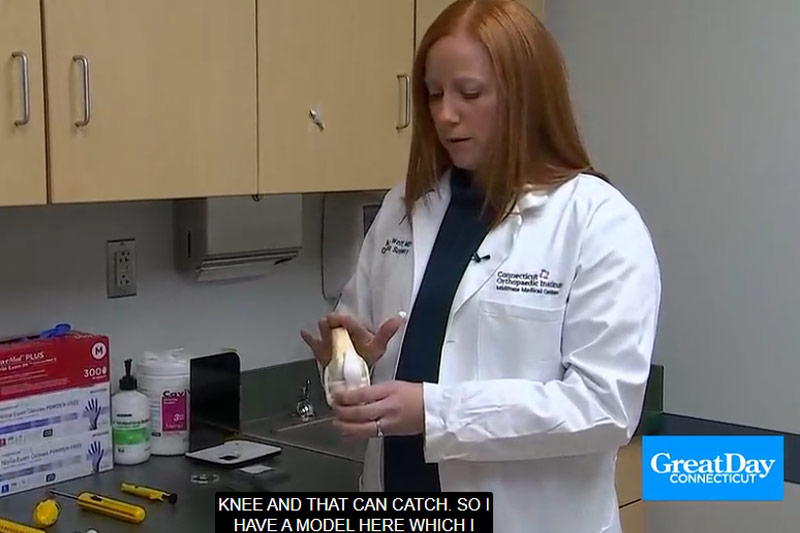
In a recent educational demonstration, Dr. Megan Wolf used a 3D knee model to clearly illustrate how a cartilage defect appears inside the joint. Healthy cartilage is smooth and resilient, allowing the bones to glide without friction. A defect, however, resembles a pothole within that surface—one that cannot heal on its own due to the tissue’s limited blood supply. This is where advanced regenerative techniques like MACI come in.
What Is MACI?
MACI, which stands for Membrane Autologous Chondrocyte Implantation, is an innovative procedure designed to repair cartilage using the patient’s own cells. The process begins with harvesting a small sample of healthy cartilage during an initial arthroscopic procedure. That sample is sent to a specialized laboratory where the chondrocytes (cartilage cells) are expanded and grown on a membrane.
Once the new cells have matured, the customized membrane is implanted into the defective area of the knee. Because the cells are autologous—meaning they come from the patient—there is no risk of rejection. After implantation, the chondrocytes begin to integrate with the surrounding tissue, healing the defect from the inside out. This makes MACI one of the most biologically advanced approaches to cartilage replacement currently available.
Recovery and Long-Term Benefits
Patients typically begin noticing improvements around the three-month mark, but it can take up to a full year to experience the maximum benefit as the new cartilage continues to strengthen. For many individuals, MACI provides long-lasting relief and, in some cases, may even help prevent or delay the need for a total knee replacement later in life.
For those struggling with persistent knee pain due to a cartilage defect, MACI represents a promising and highly personalized solution—one that restores function by harnessing the body’s own healing potential.
Watch Dr. Wolf’s full interview on Channel 3 WFSB below.
Contact Dr. Wolf to discuss available treatments that are right for you.
https://comprehensiveorthopaedics.com/contact/